Passing DP-700: How Daily Microsoft Fabric Work Became Exam Prep
I passed the DP-700 Microsoft Fabric Data Engineer Associate exam after months of using Fabric in real revenue recovery work, then reinforcing that experience with Microsoft Learn, FabCon, YouTube, and hundreds of practice questions.
I first heard about Microsoft Fabric from an FP&A analyst at my firm. At the time, I was coming from two worlds that did not always feel connected: local Python development and a complex Azure cloud engineering academic background.
Fabric immediately made sense to me because it streamlined the data trifecta I care about most: analysis, engineering, and science. Instead of treating those as separate lanes, Fabric gave me one place to explore data, engineer it, and turn it into useful business decisions. That practical use is what eventually prepared me to pass DP-700: Implementing Data Engineering Solutions Using Microsoft Fabric and earn the Microsoft Certified: Fabric Data Engineer Associate credential.
Key takeaways
The best certification prep was using Microsoft Fabric against real business problems nearly every day.
Fabric Notebooks, Python, PySpark, SQL, KQL concepts, and Delta Lake changed how quickly I could audit millions of billing records.
Pipelines, parameters, dynamic expressions, OneLake, Dataflows Gen2, lifecycle management, and monitoring became concrete instead of abstract.
Microsoft Learn, FabCon, Aleksi's YouTube videos, and practice questions rounded out the gaps from hands-on solution engineering work.
Time management matters on DP-700 because the exam moves quickly across multiple question formats.
How I found Fabric
My first exposure to Fabric came through a conversation with an FP&A analyst. I was already comfortable building locally in Python, and my academic work had pushed me deep into Azure cloud engineering. Fabric felt like the missing operational layer between those two modes.
What stood out was how quickly I could move between analytical thinking, engineering work, and data science experimentation. I did not have to keep mentally switching platforms just to move a problem forward. That mattered because the business problems I wanted to solve were not clean textbook problems. They were messy, cross-platform, and tied directly to revenue.
The first use case that pulled me in
The first serious use case I started building was similarity scoring for billing line item entities across many billing platforms. The goal was to help catalog an extremely complex billing catalog and support revenue recovery and assurance work.
That kind of problem is exactly where Fabric became interesting. The data was fragmented. Names were inconsistent. Entities that should have matched did not always line up cleanly. A local script could help, but the broader workflow needed more than a script. It needed scalable storage, repeatable transformations, and enough compute to work through large billing populations without waiting all day.
When my work shifted toward active audits
After a reorganization, my focus moved more directly into active revenue recovery audits. That changed how I used Fabric. It was no longer just a promising platform for a cataloging idea. It became part of my daily work.
Fabric Notebooks became the place where I could investigate, clean, join, and reason through billing data quickly. Instead of waiting on corporate reporting tools to run standard queries against a traditional SQL database, generate a file, and then hand me something I still had to clean in Excel, I could work closer to the data.
Scan millions of billing records in seconds instead of waiting on slow report exports.
Use Spark and native execution where the workload actually needed it.
Work against Delta Lake architecture instead of treating every audit like a disconnected spreadsheet exercise.
Engineer repeatable data workflows because I was often the only person nearby using Fabric heavily.
Why hands-on work prepared me for DP-700
Being the sole person in my vicinity using Fabric meant I had to engineer my own data many times. That was frustrating in the moment, but it became the best possible preparation for DP-700.
The exam is not just about knowing where buttons are. It expects you to understand how data is ingested, transformed, secured, monitored, optimized, and served in Fabric. Those topics are easier to remember when you have already had to make them work under real constraints.
Daily platform use gave me pattern recognition. I had seen where notebooks fit, where pipelines fit, where Spark helps, where SQL is enough, and where the lakehouse architecture changes the way you think about performance. That kind of preparation is hard to fake.
It also made the DP-700 vocabulary feel practical: PySpark transformations, Python notebooks, T-SQL queries, KQL concepts, pipeline activities, parameters, dynamic expressions, workspace settings, semantic model refreshes, and Lakehouse optimization were not just exam terms. They mapped to the actual mechanics of getting reliable data work done.
The exam vocabulary I made sure to own
Once I understood the platform through revenue recovery work, I started tightening my language around the official DP-700 domains: implementing and managing an analytics solution, ingesting and transforming data, and monitoring and optimizing that solution.
That mattered because DP-700 is really a solution engineering exam. You are constantly deciding which Fabric component fits the job: notebook, pipeline, Dataflow Gen2, Lakehouse, Warehouse, Eventstream, Eventhouse, shortcut, semantic model, or deployment pipeline. The hard part is not recognizing a product name. It is choosing the right pattern for the scenario.
PySpark, Python, SQL, T-SQL, and KQL for transformation and query patterns.
Pipelines, schedules, event-based triggers, parameters, and dynamic expressions for orchestration.
OneLake shortcuts, mirroring, Delta Lake tables, Lakehouse design, Warehouse design, and dimensional modeling for storage and serving layers.
Dataflows Gen2, notebooks, Spark structured streaming, Eventstreams, Eventhouses, and Real-Time Intelligence for ingestion choices.
Workspace access controls, item-level security, sensitivity labels, audit logs, deployment pipelines, version control, and lifecycle management for governance.
Pipeline errors, notebook errors, Dataflow Gen2 errors, semantic model refresh, alerts, query performance, Spark performance, and Lakehouse table optimization for monitoring.
The structured prep that filled the gaps
Hands-on work gave me the base, but I still needed structured preparation. I completed the DP-700 learning path on Microsoft Learn over a couple of weeks. That helped me organize the platform knowledge I had picked up organically and identify areas I had not touched as deeply in my day-to-day work, especially KQL, Eventstreams, deployment pipelines, lifecycle management, security, governance, and monitoring.
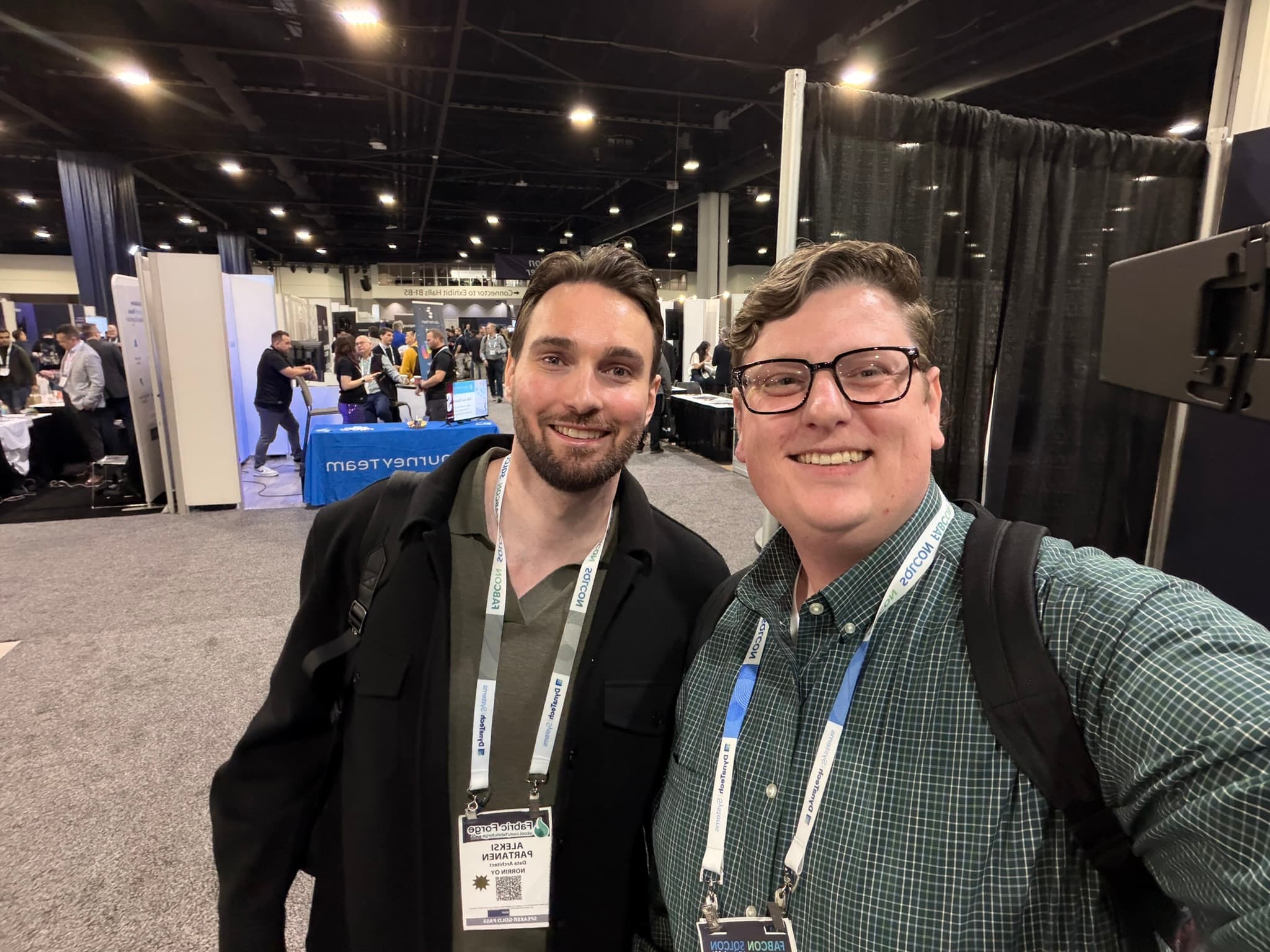
I also attended FabCon 2026, where I met Aleksi Partanen. His YouTube videos became part of my study routine afterward. I will put them on in the background while driving or running errands so a 15-minute drive still teaches me at least one concept.
I think of that as learning by osmosis. It is not a replacement for focused practice, but it is a real multiplier. Hearing the same topic explained by different teachers gives me a more rounded understanding than reading one source and assuming I have it locked in.
Microsoft Learn gave me the official structure.
FabCon gave me community context and a stronger sense of where Fabric is heading.
Aleksi's videos gave me repetition from a different teaching perspective.
Background learning helped turn small gaps into familiar concepts before exam day.
Why I did hundreds of practice questions
I also took roughly 500 practice questions. That brought me back to my Academic Team roots in high school. You would be surprised how effective hitting your head against a wall can be when the wall is a large question bank.
The point was not memorization. It was pattern recognition under pressure. Practice questions forced me to notice weak areas, read wording carefully, and get comfortable switching between scenarios. That matters because certification exams are not only testing knowledge. They are testing whether you can recognize the right concept fast enough to apply it.
Scheduling the exam
I scheduled the exam using a free voucher from Microsoft. That made the moment feel even better because, between my master's degree and this data engineering certification, I have been able to build a serious amount of formal education and validation over three years without paying out of pocket.
That does not make the work free. It still took nights, weekends, platform time, and a lot of reps. But financially, it is hard not to appreciate the path.
What exam day felt like
Time management was the biggest exam-day factor. In my sitting, the pacing worked out to roughly two and a half minutes per question across multiple choice, case studies, and scenario-based prompts. That is not much time when a question asks you to reason through architecture, execution behavior, or the right Fabric component for a situation.
The practice questions helped here. I had already trained myself to move, mark questions when needed, and avoid getting stuck too long on one prompt. The exam rewards calm pattern recognition as much as raw knowledge.
What passing means to me
Passing DP-700 felt like validation of the way I have been learning Fabric: start with real business pain, build with the platform, then use structured study to tighten the edges.
I am excited to use the credential as momentum for initiatives I care about. For me, the value is not just the badge. It is the permission it gives me to keep pushing Fabric-centered data engineering work forward, especially in places where analysis, engineering, and revenue assurance all overlap.
If you are preparing for DP-700 or using Microsoft Fabric for revenue assurance, billing analytics, or data engineering work, I would be glad to compare notes.